The 7 Principles of HACCP, and Where Sanitation Fits
The seven HACCP principles as NACMCF wrote them, the five preliminary tasks that come first, and why your sanitation programme is almost certainly a prerequisite rather than a critical control point.
HACCP has seven principles: conduct a hazard analysis, determine the critical control points, establish critical limits, establish monitoring, establish corrective actions, establish verification procedures, and establish record-keeping. They were set out by the National Advisory Committee on Microbiological Criteria for Foods and adopted in 1997.
That list is on a few hundred websites. What follows is the part that actually decides whether a plan survives an audit: the five tasks that come before principle one, and the question of what belongs in the plan at all.
What are the seven principles, exactly?
Quoted as NACMCF wrote them:
- Conduct a hazard analysis. “Prepare a list of steps in the process where significant hazards occur and describe the preventative measures.”
- Determine the Critical Control Points (CCP) in the process.
- Establish the critical limits “for preventative measures associated with each identified CCP.”
- Establish CCP monitoring requirements. “Establish procedures for using the results of monitoring to adjust the process and maintain control.”
- Establish corrective action “to be taken when monitoring indicates that there is a deviation from an established critical limit.”
- Establish procedures for verification “that the HACCP system is working correctly.”
- Establish effective record-keeping procedures that document the HACCP system.
Note what principle 1 asks for and what it does not. It asks for the steps where significant hazards occur. A hazard analysis that lists every conceivable thing that could go wrong is not a thorough hazard analysis, it is an unfinished one, because the work is the judgement about which hazards are reasonably likely to occur and severe enough to matter.
What has to happen before principle one?
NACMCF specifies five preliminary tasks, and plans that fail tend to fail here rather than in the seven.
- Assemble the HACCP team. Multi-disciplinary by design: engineering, production, sanitation, quality assurance, microbiology. A plan written by one person in an office describes a process nobody runs.
- Describe the food and its distribution. Composition, processing, packaging, storage and shipping conditions.
- Describe the intended use and the consumers. This changes the analysis materially. A product intended for immunocompromised patients does not carry the same acceptable risk as the same product sold to the general public.
- Develop a flow diagram covering every step in the process.
- Verify the flow diagram on site. Walk the floor and confirm the diagram matches what actually happens, across shifts.
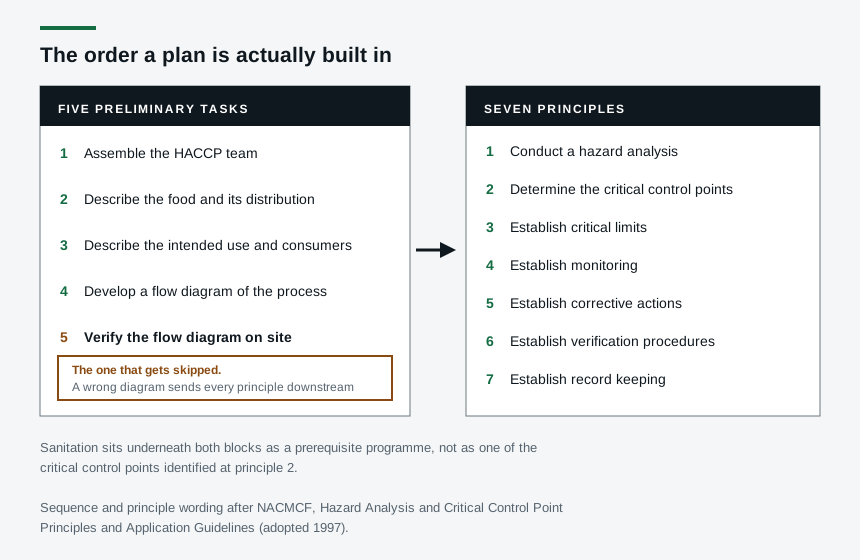
Step five is the one that gets skipped, and skipping it is how a plan ends up controlling a process that has not existed for two years. If the diagram is wrong, principle 1 analyses the wrong steps, principle 2 puts control points in the wrong places, and everything downstream inherits the error.
Is sanitation a critical control point?
Almost never. Sanitation is a prerequisite programme, and the difference is not bureaucratic.
Prerequisite programmes are the general conditions that make safe production possible: cleaning and sanitizing, pest control, water safety, personal hygiene, chemical storage, maintenance. Huss and Ryder, writing for the FAO, describe them as “the basic environmental and operating conditions for production of safe food,” which have to be in place before HACCP is implemented at all.
The cleanest test between the two is what a failure obliges you to do. From the same source:
Deviations from compliance in a prerequisite programme usually do not result in reaction against the product.
Where a deviation from a critical limit at a CCP “always leads to reaction against the product.” That is the practical distinction. If a sanitizer was mixed at the wrong concentration on a Tuesday, you correct it, record it and look at why. If a cook step fell below its critical limit, product is on hold and you are making a disposition decision about it.
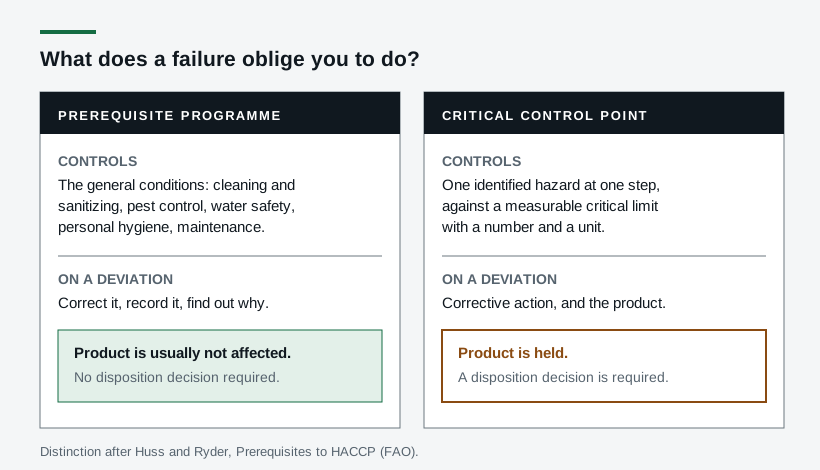
This is also why loading sanitation into the plan as a CCP is a mistake rather than an abundance of caution. Every prerequisite you promote to a critical control point is a step that now demands monitoring at a defined frequency, a critical limit, a corrective action with product disposition, and a verification record. Do that to your whole cleaning schedule and you have built a plan that cannot be run, which is worse than a narrow one that can.
Prerequisites still have to be documented, monitored and verified. They are simply not the same instrument. Under the US seafood HACCP regulation, Sanitation Standard Operating Procedures are the documented form of that: processors must monitor the key sanitary conditions, correct deficiencies, and keep records.
What is the difference between validation and verification?
They are routinely used as synonyms and they answer different questions.

Validation asks whether the plan would work if followed. It is the scientific and technical evidence that your critical limit actually controls the hazard: the thermal-death-time data behind a cook step, the published kill data behind a sanitizer concentration and contact time. You validate once at the outset, and again when something changes.
Verification, principle 6, asks whether the plan is being followed and is still working. Records review, calibration of the instruments doing the monitoring, targeted testing, internal audit.
An auditor finding no validation is finding a plan built on assumption. An auditor finding no verification is finding a plan nobody has checked.
What counts as a critical limit?
A measurable value at a CCP, with a number and a unit. Temperature, time, pH, water activity, available chlorine, moisture level.
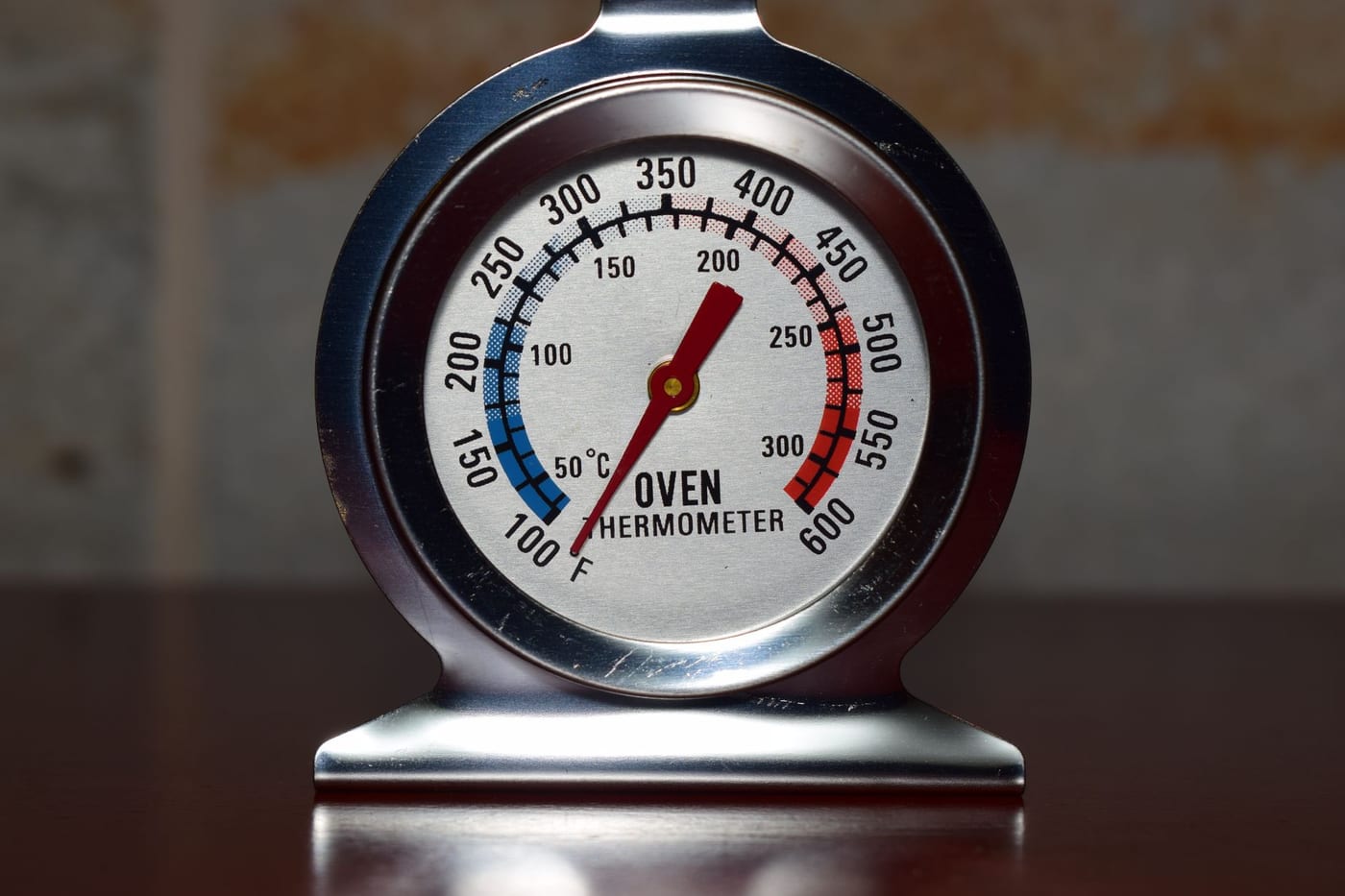
“Cook thoroughly” is not a critical limit. “Clean as needed” is not a critical limit. If a limit cannot be measured by the person doing the monitoring, at the moment they are doing it, then principle 4 has nothing to monitor and principle 5 has no trigger, so the chain from 3 through 5 is broken even though all three appear in the document.
Why is record-keeping principle seven and not an afterthought?
Because a HACCP plan produces two outputs: a controlled process and the evidence that the process was controlled. Losing the second one loses most of the value of the first.
Principle 7 covers the hazard analysis itself, the plan, the monitoring records, the corrective action records and the verification records. A monitoring record should let a reader who was not there reconstruct what the value was, when it was taken, who took it, and what happened if it was out of limits.
The documentation principle is the same one that governs sanitation records generally, and it fails the same way in both places: the work gets done and the record gets written up later, in a batch, from memory. A regulator reading a week of identical readings in the same pen is not looking at a record. They are looking at the absence of one.
Where to go from here
HACCP is one framework among several that a facility may be operating under at once, and they layer rather than replace each other. FSMA Preventive Controls, the GFSI-recognised certification schemes, and the FDA Food Code all expect a documented sanitation programme underneath whatever else you are doing. The regulations that govern sanitation sets out which apply to which kind of facility.
If you are building a plan now, do the five preliminary tasks properly and walk the flow diagram before writing a word of the seven. Everything else is downstream of getting that right.